If you have ever shared a meal in West Africa, you have most likely come across fufu. You know what it tastes like, and most importantly, what it means. For West African countries like Ghana, it is the meal that symbolises family. It gets made together, eaten together, and remembered long after the meal is over.
Trying to describe fufu does not do justice to the feel you get when enjoying it, but it is soft, smooth, and satisfying. Made from starchy crops like cassava, yam, plantain, and cocoyam, pounded into a stretchy dough and eaten with rich soups and stews, the ingredients change depending on where you are.
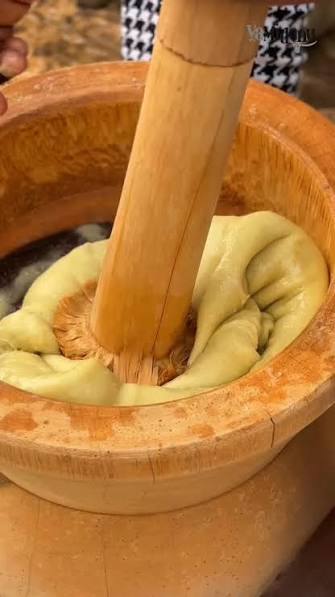
Fufu is a Twi word, originating from the Akan people of Ghana, and the dish has been part of West and Central African food culture for centuries. The pounding, done with a wooden mortar and pestle called a waduro in Ghana, was never just about the food. Families and neighbours took turns, kept rhythm, and passed the time with conversation. The meal at the end of it was earned.
Fufu does not belong to one country. Every region has its own version, its own name, and its own way of eating it. Here is how it shows up across the continent.
In Ghana, fufu is traditionally made by pounding boiled cassava and plantain together until smooth and stretchy. Some families add yam or cocoyam depending on regional tradition. It is served with light soup, palm nut soup, groundnut soup, or vegetable soup, and eaten with the right hand, pinched into a small ball and dipped into the broth. Many Ghanaians still insist on the mortar and pestle. The texture and the process are both part of the experience.
In Nigeria, fufu most commonly refers to akpu, made from fermented cassava that is soaked, fermented, cooked, and pounded into a dense, slightly tangy dough. Nigeria also has a wide family of related dishes: pounded yam, eba made from garri, amala made from yam or plantain flour, and semo. These are served with egusi, ogbono, efo riro, and other rich soups. Each swallow has its loyal following, and no one agrees on which is best.
In Côte d’Ivoire, three distinct versions exist, and they are not interchangeable. Foufou is made from mashed sweet plantains, smooth and lighter in texture. Foutou is a heavier paste made from yam, cassava, plantain, taro, or a combination of these, denser and more filling. Placali is made purely from fermented cassava, giving it a smooth, white finish with a mild tang. Each has its preferred pairing: foutou with palm nut sauce or kedjenou, placali with fish stew or pepper soup.
In Cameroon, cassava-based fufu is widely enjoyed and is often called cassava couscous in the French-speaking regions, not to be confused with the North African couscous, which is an entirely different dish. In Central Africa more broadly, foufou refers to the fermented cassava paste common in the DRC, Congo-Brazzaville, and Gabon, smooth, white, and slightly tangy from the fermentation process.
The East and Southern African equivalent of fufu goes by many names depending on where you are. Ugali in Kenya and Tanzania. Posho in Uganda. Nshima in Malawi and Zambia. Sadza in Zimbabwe. Pap in South Africa. Ubugari in Rwanda and Burundi. These are typically made from maize or millet flour rather than cassava or yam, giving them a firmer, denser texture, but they serve the same role at the table: a neutral, filling base that carries the flavour of whatever stew or sauce it is paired with.
Fufu has a mild, starchy taste by design. It is built to carry something richer alongside it.
Peanut soup, also known as groundnut soup, is one of the most classic pairings, its creamy, nutty depth balancing the smooth texture of the dough. Palm nut soup brings a deep, earthy warmth. Light soup, despite the name, carries enough spice and freshness to make the whole bowl feel alive. In Nigeria, egusi and ogbono soups are the natural partners for pounded yam and fufu, thick, flavourful, and built for swallowing.
The rule is simple: the better the soup, the better the fufu experience.
Traditionally, fresh cassava and plantain are peeled, cleaned, and boiled until soft, then pounded in a wooden mortar with small amounts of water added gradually to achieve the right texture. The pounding requires rhythm and strength, and in many households it is still done by hand, the same way it has been done for generations.
Today, many people in the diaspora use blenders, food processors, or instant fufu flour to prepare it faster. The goal remains the same: a smooth, stretchy dough that holds together when pinched and melts against a mouthful of soup.
Almost every African restaurant on Dishout serves fufu or its equivalent, from the Ghanaian version made with cassava and plantain to the Nigerian version made from fermented cassava, pounded yam, eba, or amala. The tip is knowing which country’s version you enjoy most. Check each store’s profile on the app to see which country’s meals they prepare, and order accordingly. Use the global search feature to find a fufu spot closest to you and get it delivered hot to your door.

Frequently Asked Questions
What is fufu?
Fufu is a soft, stretchy West African dough made from starchy crops like cassava, yam, plantain, or cocoyam. It is pounded or processed into a smooth dough and eaten with rich soups and stews. It is one of the most widely eaten dishes across West and Central Africa.
What is fufu made from?
Fufu is traditionally made from starchy crops such as cassava, yam, plantain, and cocoyam. The ingredients vary by country and tradition. In Ghana, fufu is commonly made from boiled cassava and plantain pounded together into a smooth, stretchy dough.
What does fufu taste like?
Fufu has a mild, slightly starchy taste that pairs perfectly with rich soups and stews. Its smooth, stretchy texture is designed to absorb the flavour of whatever it is eaten with, making the soup as important as the fufu itself.
How do you eat fufu?
Fufu is traditionally eaten with the right hand. A small piece is pinched off, shaped into a ball, and dipped into soup or stew before swallowing. It is not chewed in the traditional sense. Common pairings include light soup, palm nut soup, groundnut soup, egusi, and ogbono.
What are the different names for fufu across Africa?
Fufu goes by many names depending on where you are. In Côte d’Ivoire it is known as foutou, foufou, or placali depending on the version. In Cameroon and Central Africa it is often called foufou or cassava couscous. In East Africa, the equivalent dish is ugali in Kenya and Tanzania, posho in Uganda, nshima in Malawi and Zambia, sadza in Zimbabwe, pap in South Africa, and ubugari in Rwanda and Burundi.
Is fufu a Ghanaian or Nigerian food?
Fufu is a West and Central African dish enjoyed across many countries including Ghana, Nigeria, Côte d’Ivoire, Cameroon, and the DRC. The word fufu comes from the Twi language of the Akan people in Ghana, but every country has its own version, ingredients, and preparation style.
Is fufu healthy?
Fufu provides energy as it is made from carbohydrate-rich crops like cassava, yam, and plantain. When eaten with soups containing vegetables, fish, meat, or nuts, it forms part of a balanced and nutritious meal.
Can fufu be made without a mortar and pestle?
Yes. Many people in the diaspora now use blenders, food processors, or instant fufu flour to prepare it. These methods save time while still producing the smooth, stretchy texture that makes fufu what it is.
What soups go best with fufu?
Fufu pairs well with peanut soup, palm nut soup, light soup, egusi, ogbono, and vegetable soups. The mild flavour of fufu allows it to carry the richness of the soup without competing with it.
Where can I order fufu on African Dishout?
Almost every African restaurant on Dishout serves fufu or its equivalent. Check each store’s profile to see which country’s meals they prepare, and use the global search feature to find a fufu spot closest to you.

Because home should be just one tap away