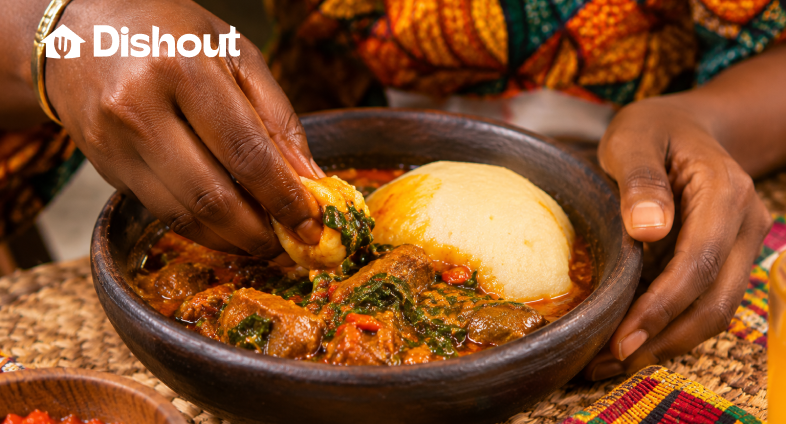
Imagine sitting in front of a steaming bowl of fufu and light soup. The meat is perfectly cooked, the soup smells incredible, and you're ready to eat. Then someone hands you a fork.
Now, nobody is saying you can't eat fufu with a fork, but you have to admit that something about the experience feels different. Across Africa, eating with your hands is a familiar part of food culture. From Ghanaian banku and Nigerian pounded yam to Senegalese thieboudienne and Ethiopian injera, many traditional meals are enjoyed without conventional cutlery. But does eating with your hands actually make food taste better, or is it simply something we've grown accustomed to?
Let's be practical. How exactly are you supposed to enjoy a proper bowl of okro soup with a fork?
You could certainly try, but you'll probably spend more time chasing the soup around your plate than enjoying it. Foods like fufu, banku, amala, eba, and pounded yam are traditionally eaten by taking a small portion with your fingers and pairing it with soup or stew. The technique makes it easy to scoop up the right amount of food and enjoy the combination in one bite. There's also injera, the soft Ethiopian and Eritrean flatbread used to pick up stews and vegetables. Instead of being served with separate cutlery, the bread itself becomes part of how the meal is eaten.
Of course, there's nothing wrong with using a spoon or fork if that's what you prefer. But for many people, eating these dishes with their hands is simply the most natural way to enjoy them.
There's something interesting about being able to feel your food before eating it. When you eat with your hands, you can sense the texture and temperature of each bite. You know whether your banku is soft, your fufu is firm, or your rice has cooled enough to eat comfortably.
It also gives you more control over how much soup, stew, or sauce goes into each mouthful. Anyone who has eaten fufu with soup knows that getting the perfect combination requires a little skill. Too much soup and you're in trouble. Too little and the bite feels incomplete. Your fingers help you manage the balance, although they won't necessarily save you from splashing soup on your clothes.
Contrary to what some people assume, eating with your hands doesn't mean abandoning table manners. In many African communities, there are established customs around handwashing, serving food, and sharing meals.
For example, in several West African cultures, people traditionally wash their hands before eating and use the right hand when taking food from a shared plate. Similar customs exist in other parts of Africa, although the specific practices vary between communities and households. Hygiene is especially important when eating with your hands. Clean hands, properly maintained fingernails, and appropriate handwashing facilities are essential. And if you're sharing a bowl, there are additional expectations about respecting other people's portions and keeping the meal pleasant for everyone. So yes, there are rules. Your grandmother probably knew all of them, and she'd have no problem correcting you if you forgot.
One of the most beautiful things about African food culture is the way meals bring people together.
In many households, eating from a shared bowl or platter is a familiar tradition. It creates an opportunity to talk, laugh, and spend time together while enjoying the same meal. Think about a family gathered around a large serving of rice and stew or friends sharing a platter of Ethiopian food with injera. There's something wonderfully social about it. Of course, sharing food also introduces certain challenges. There's always that one person who seems to have an unusually accurate sense of where the biggest piece of meat is hiding. You look away for two seconds, and somehow the chicken has disappeared.
But that's part of the experience, isn't it?
The way we experience food involves more than taste alone. Smell, texture, temperature, appearance, and even our expectations influence how much we enjoy a meal.
Touching food with your hands adds another sensory element to the experience. For someone who grew up eating certain dishes this way, the familiarity can make the meal feel more satisfying. But that doesn't mean eating with your hands automatically makes food taste better for everyone.
Personal preference, cultural background, the type of food, and how comfortable someone feels all play a role. For some people, nothing beats enjoying fufu with their fingers. Others would rather use a spoon, and that's perfectly fine. The important thing is enjoying your food in a way that feels comfortable, respectful, and hygienic.
Let's be fair. Some African meals require a little more coordination than others. Eating rice with your hands can be straightforward once you're used to it. But dealing with a particularly slippery piece of fish, a generous serving of okro soup, or a bowl of very hot soup requires patience.
And if you're wearing a beautiful white outfit, you might want to reconsider your level of confidence. There's also the issue of licking your fingers after a particularly good meal. Some people consider it perfectly normal in casual settings, while others prefer to avoid it, especially when dining in public. The important thing is to respect the people you're eating with and the customs of the setting.
Although we must admit, resisting the urge to lick your fingers after a really good stew takes considerable discipline.
For Africans living in the United States and other parts of the world, eating traditional meals can sometimes involve navigating different dining expectations. You might visit a restaurant where everyone uses cutlery, or introduce a friend to fufu for the first time and watch them wonder what to do with their hands. These moments can be funny, but they're also opportunities to share something meaningful about African food culture. Instead of treating hand-eating as unusual, it's worth recognising that different cultures have different approaches to enjoying meals.
After all, people happily eat pizza, burgers, tacos, and sandwiches with their hands without giving it much thought.
So why should fufu be any different?
For many of us, absolutely. There's a familiar satisfaction in enjoying traditional dishes the way we grew up eating them. But the answer ultimately depends on the food and the person eating it. A fork won't ruin a good plate of rice, and a spoon won't suddenly make your favourite soup less delicious. What matters most is the quality of the meal and the enjoyment that comes with it. Whether you're eating with your hands or using cutlery, African Dishout helps you discover delicious African meals from restaurants in your delivery area. Just make sure you wash your hands before digging in.
Would you ever eat fufu with a fork, or is that completely unacceptable in your household?
Explore African Food on Dishout

Because home should be just one tap away