At some point, somebody's algorithm looked at a map of the entire continent of Africa, got completely confused, and just started guessing.
And it has been guessing ever since.
That's the only explanation for what has been happening in food delivery apps, restaurant menus, and grocery store "international" aisles across the diaspora. Jerk chicken listed under African cuisine. Hummus. Peri-peri sauce manufactured in a factory somewhere in New Jersey, bottled with a sunset and an acacia tree on the label, sold to you as something deeply, authentically African.

We cannot keep doing this.
Here is the thing about food fraud: it only works on people who have been kept far enough from the real thing.
When you grow up eating your grandmother's egusi soup, the kind where the melon seeds have been ground just right and the meat has been sitting in that pot long enough to absorb everything around it, no one on earth can hand you a bowl of something else and tell you it's the same. You will know. Your body will know before your brain finishes processing.
But when you grow up in a city where African food is a category and not a culture, when your only reference point is a restaurant that serves "pan-African cuisine" meaning it gestures vaguely at an entire continent without committing to any of it, then you are vulnerable. Not because you are careless. Because you were never given the information you needed to protect yourself.
Someone hands you jerk chicken and calls it African cuisine and you have no way of knowing that what you actually needed was a bowl of ogbono soup with assorted meat that has been cooking long enough to earn it. Or egusi, rich and deep, the kind your mother made when she was in a good mood. Or a whole fried tilapia with tomato stew and a side of avocado that makes you wonder, genuinely wonder, why you ever ate anything else.
You didn't know. That's not your fault. But it is the problem.
Africa has 54 countries. Thousands of ethnic groups. Hundreds of distinct food traditions that have been developed, refined, and passed down across generations. Food that carries history, ceremony, geography, and memory all in the same pot.

Jollof rice is not one dish. It is a conversation between countries, each convinced, correctly, that their version is the best. Fufu is not a texture. It is a ritual. The difference between what your Yoruba colleague's mother cooks and what your Ghanaian neighbor is making on a Sunday is not a minor variation. It is a different world, and both worlds are worth knowing.
Reducing all of that to a category, slapping a sunset on it and calling it African food, is not just lazy. It is a kind of erasure. It tells a billion people that their specific food traditions are interchangeable, that the details do not matter, that close enough is good enough.
Close enough is never good enough.
Let's be specific, because specificity is the whole point.
Egusi soup, when it's made right, has a particular depth that comes from the melon seeds being dry-roasted before they're ground, from the palm oil being cooked down until it stops being raw, from the stockfish and the crayfish doing their quiet work in the background. It is not a simple thing. It rewards the people who know it.
Ogbono draws. That is a specific and beautiful thing that ogbono does, it pulls and stretches in a way that no other soup does, and it coats the back of your throat in a way that stays with you. You do not describe ogbono to someone who has never had it without sounding like you are in love. You are, a little.
Groundnut soup in Ghana is not the same as the peanut stew someone Americanized on a food blog, no matter how many good intentions went into that recipe. Kelewele — plantain fried with ginger and pepper and spices, is not "spicy plantain chips." Banku is not a "fermented dumpling." The words matter because the food matters.
This is what the diaspora deserves to be able to order. Not approximations. Not the algorithm's best guess. The actual food.
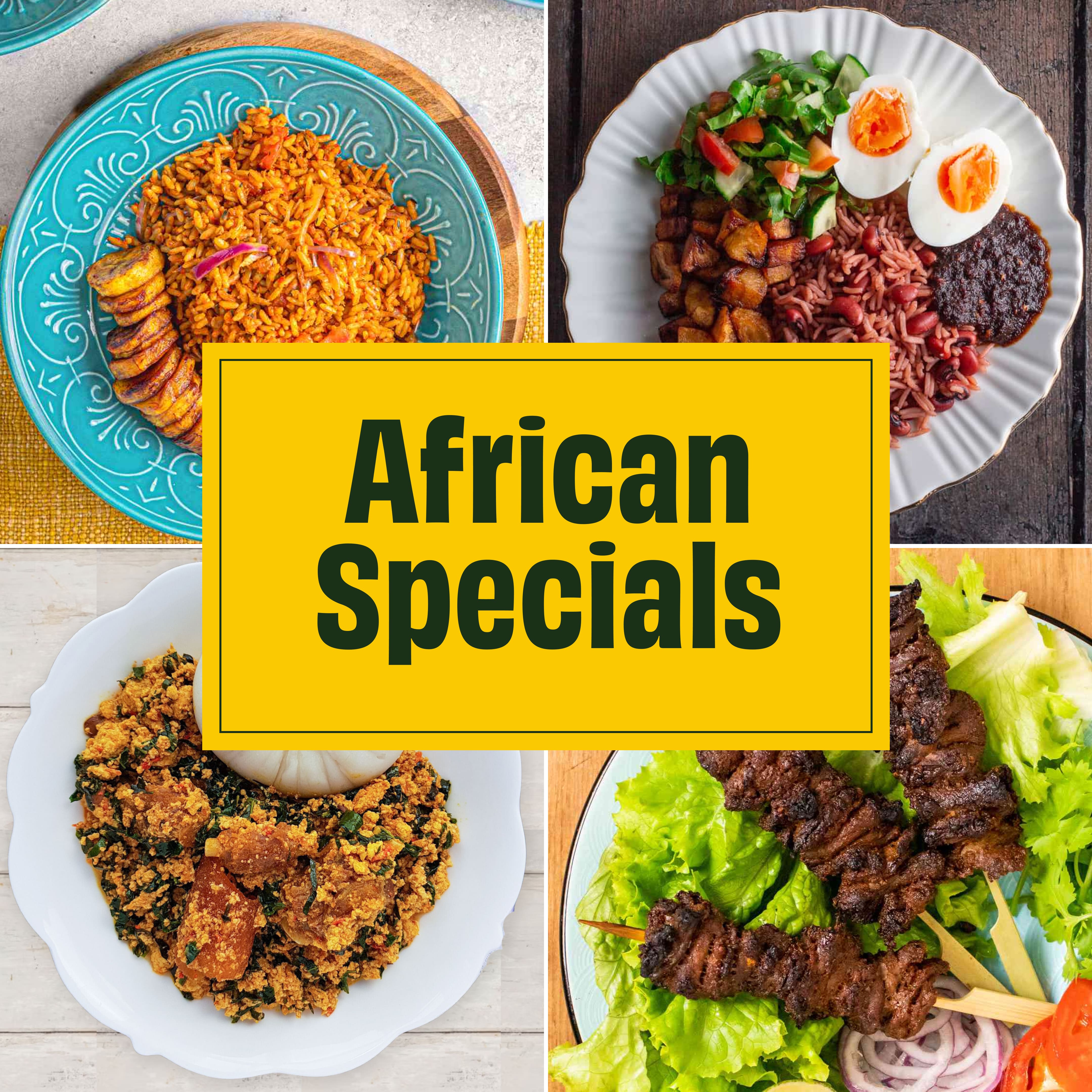
The people behind Dishout grew up with this food. That is not a marketing line. It is the only qualification that matters.
They know the difference between egusi and ogbono, not just that they exist, but how they taste, how they cook, what they go with, and which one your mother made when she was in a good mood versus which one appeared when she had run out of time and patience. They know which scotch bonnet is going to add flavor and which one is going to make your eyes water and your dignity leave the room. They know the continent, they know the diaspora, and they know that hummus has never once belonged on an African food menu.

When you order on Dishout, you are not getting somebody's best guess at what African food might be. You are not getting an algorithm that looked at a map and started improvising. You are getting the real thing, the food that actually exists in African homes and African restaurants, made and sourced by people who would be personally offended by the alternatives.
No guessing or jerk chicken pretending to be something it is not.
The diaspora has been patient long enough. You grew up knowing what real food tastes like, carrying that memory across borders and time zones and years of eating things that were fine but were not it.
Dishout is it.

Can I order suya or khebab on Dishout?
Yes. Get suya, khebab, dibi, and other African grilled meats from African restaurants near you on the African Dishout app.
Where can I get the spices to make suya at home?
Order suya spice or suya powder, and your other local African ingredients on African Dishout, delivered from African grocers near you.
Is jerk chicken African food?
No. Jerk is Jamaican, rooted in the Caribbean. It gets mislabelled as African at generic events, but it belongs to a different tradition.
What are some popular African grilled meats?
Suya from Nigeria and chichinga, the khebab you find on Ghanaian streets. Dibi lamb, dibi chicken, pintade [guinea fowl], choukouya and more from Ivory Coast and Senegal. You can order any of these from the African Dishout app.

Because home should be just one tap away