Ga Kenkey
Why the Best Kenkey Takes a Week to Make, Jamestown Style
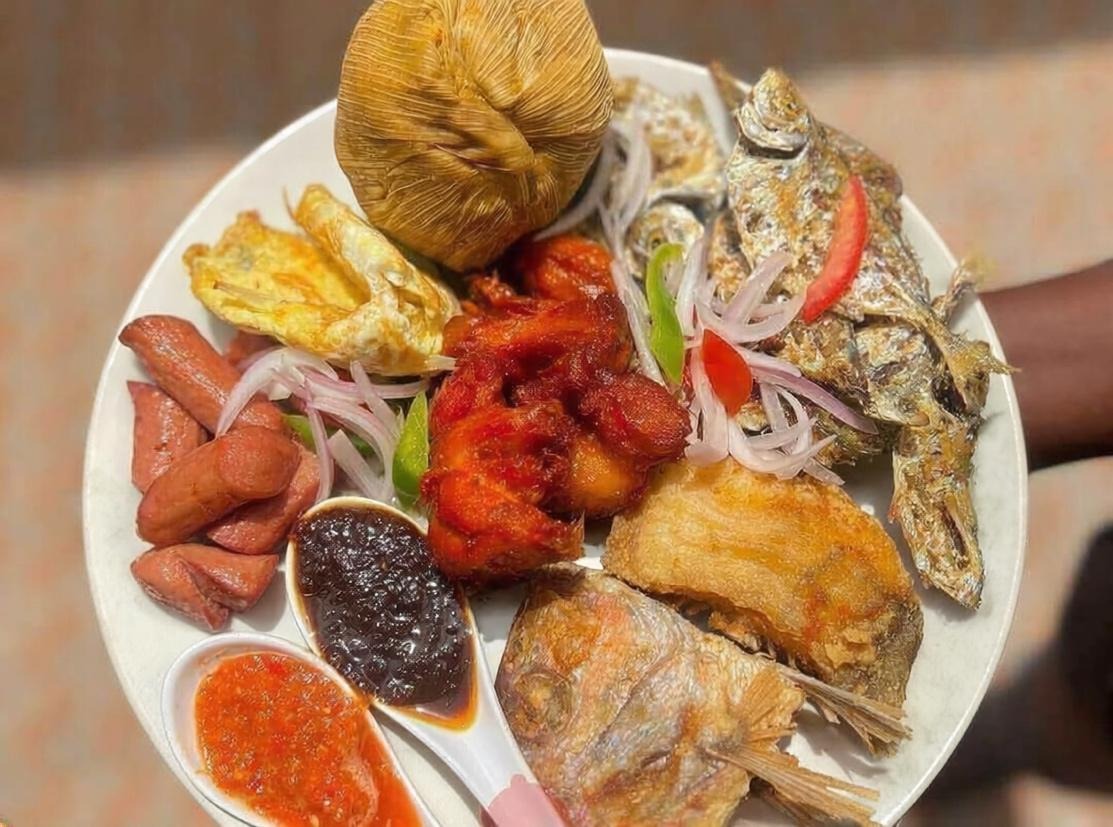
Kenkey is a corn-based meal from Ghana, made mostly by the Ga people in the Greater Accra region and the Fante in the Central and Western regions. The Ga call it komi, and the Fante call it dokono. The main ingredients are fermented corn dough, salt, water, and corn husk.
Kenkey is genuinely tedious to make, which is exactly why vendors who consistently get it right- soft, well-cooked, and tasting the way it should- become local legends in their own communities.
The traditional Ga process begins with dry corn grains soaked in water for days until soft. The grains are then milled into corn dough, which is left to ferment for about a week before it ever touches a pot. This step is non-negotiable. It's the week of fermentation that gives kenkey its soft texture. Skip it or rush it, and you get the most common sign of bad kenkey: a hard, dense kenkey nobody wants.

From there, part of the fermented dough becomes aflata. It's mixed with water and stirred over the fire with a wooden spatula, pressed against the pot as it thickens, the same way banku is made, except aflata comes off the heat while it's still partially cooked. That aflata gets mixed back in with the raw fermented dough until it's fully combined.
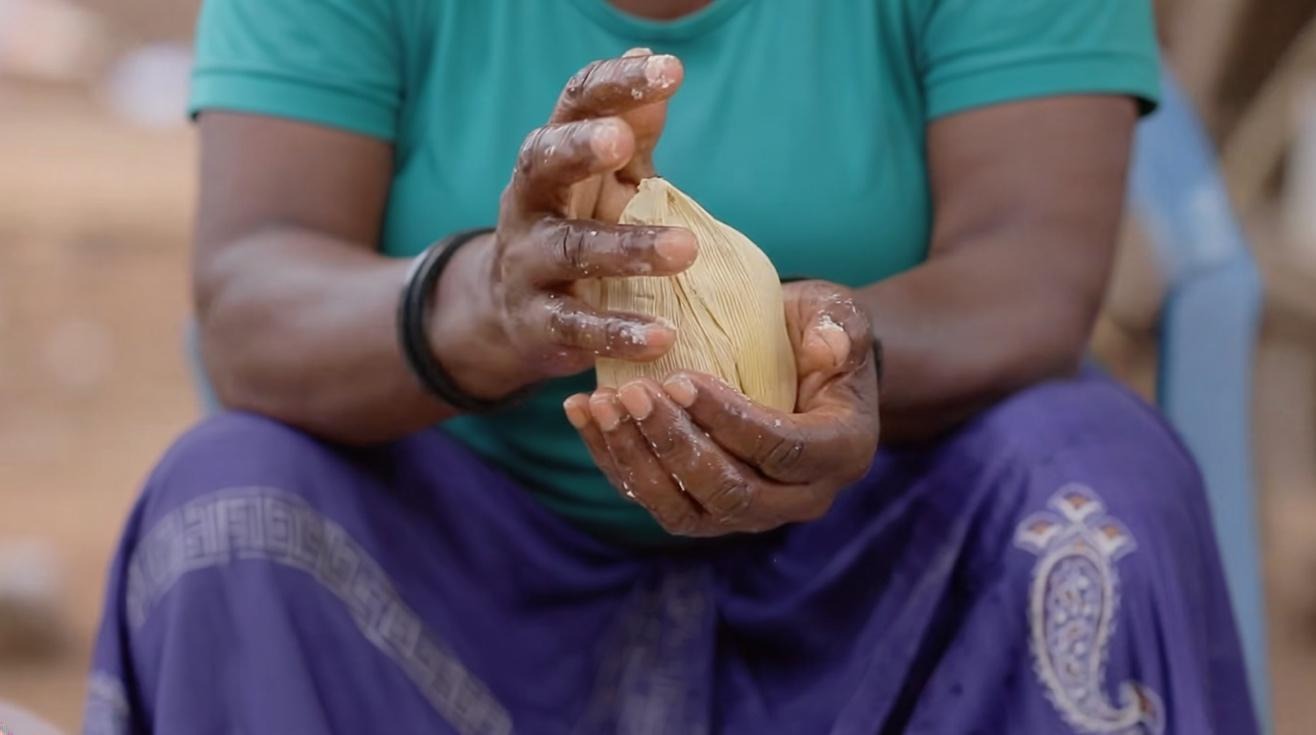
This is where the corn husk comes in, washed and soaked before it ever wraps a single kenkey. Once wrapped, the kenkey goes into a pot with water added, covered tightly, and set over a fire hot enough to cook it through. That final cook alone takes about three hours before it's ready to eat.
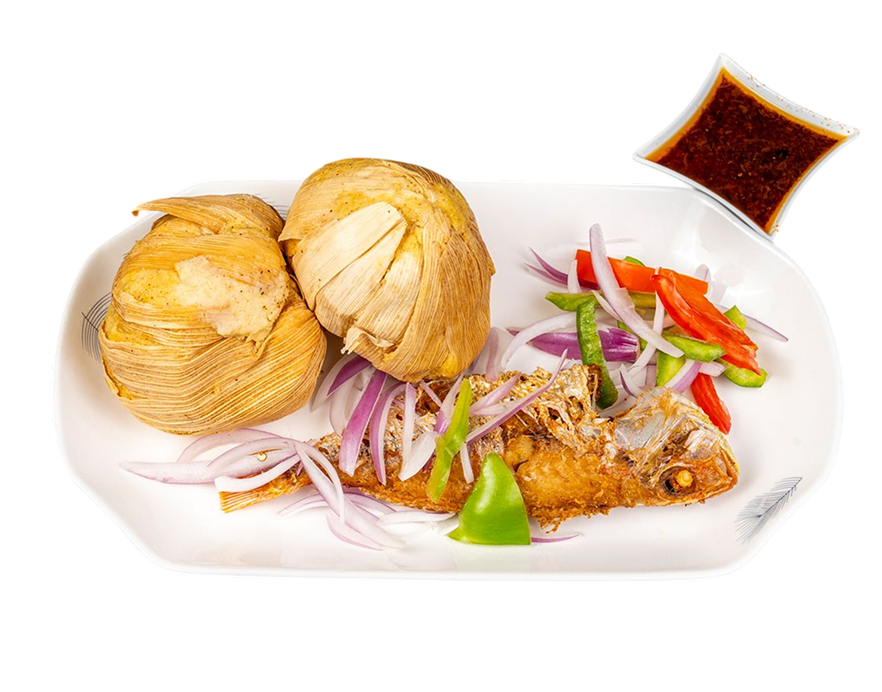
Kenkey is traditionally eaten with red pepper, shito, onion, and tomatoes, alongside fish, shrimp, or any protein of choice. Some prefer it with okra soup or stew instead. In Ga communities, kenkey making has long been women's work, and market women known as kenkey sellers are respected tradeswomen, and some still guard fermentation starters passed down through generations. The dish's reach extends beyond Ghana too. Versions of it crossed the Atlantic during slavery and took root across the Caribbean, evolving into dishes still eaten today: dokunu, also known as tie a leaf, in Jamaica, and ducana in Antigua. Different names, same hands, an ocean apart.
On Dishout, our stores make and sell kenkey that will take you straight to the streets of Jamestown. Well made, soft, and served the right way. Our restaurants serve it with protein and all the condiments, and our grocery stores sell it by the piece or in bulk.
In the Bronx, start with Kenkey Hut, a store built entirely around kenkey, the same way kenkey houses operate back in Ghana. Portions are generous, and the fish selection runs deep: tilapia, porgies, whiting, and red fish, alongside choffi and shrimp. Nearly all our Ghanaian restaurants carry kenkey too, including Accra Restaurant, Aduanipa Restaurant, Adom Restaurant, Adab Restaurant, Mama G Kitchen, and Kumasi Restaurant. In Worcester, find it at Joyfulway Restaurant, Elder Paintsil's Restaurant, and Victoria Evergreen Restaurant. In New Jersey, check Aunty Lizzy's Oseikrom Restaurant, A Jaaraama Restaurant, and Nima Restaurant.
Use the global search feature to find a store closest to you, and enjoy a plate of Ghana's delicacy.

FAQ
What is kenkey made of?
Kenkey is made from fermented corn dough, salt, water, and corn husk. The dough is fermented for about a week before cooking, which gives kenkey its signature soft texture.
What is the difference between Ga kenkey and Fante kenkey?
Ga kenkey, made by the Ga people of Greater Accra, is wrapped in corn husks. Fante kenkey, made by the Fante people of Ghana's Central and Western regions, is wrapped in plantain leaves instead.
How long does kenkey take to make?
The full process takes about a week from start to finish, with most of it spent fermenting the corn dough. Once wrapped in corn husk, the final steaming takes about three hours.
What do you eat with kenkey?
Kenkey is traditionally eaten with red pepper, shito, onion, and tomatoes, alongside fish, shrimp, or any protein of choice. Some prefer it with okra soup or stew instead.

Because home should be just one tap away